Friday, April 15, 2011

The Vital Role of Sleep in Repairing Cells


The importance of sleep goes beyond just providing your body rest. Sleep helps to: improve the rate at which we learn; improve memory; reduce the risk of accidents and mishaps; improve mood; improve cardiovascular health; reduce the risk of disease; and more easily control metabolism and weight.

Sleep triggers hormones that help cells to repair the damage done to your body that day. The most important hormone in this process is probably human growth hormone (HGH), which stimulates cell growth by mediating in the metabolism of protein, fats, and carbohydrates. HGH also influences weight control by telling fat cells to release the energy in the fats they are storing and to reduce additional storage.

Your body seems to understand when to bring in these hormones, which isn't when you're performing normal daily activities such as work and play. As much as 70% of the growth hormone produced in any 24-hour period is secreted while you are sleeping.

This is why the time you schedule for sleep is important. Your body begins preparing for sleep as soon as the sun goes down, most importantly by secreting melatonin, a hormone that helps to regulate sleep. Secreting growth hormone begins not long after (and more HGH is released during the earlier hours of the night rather than later in the night).

The result is that 8 hours of sleep from 10 PM to 6 AM produces a greater level of HGH than would occur during the same amount of sleep from midnight to 8 AM. Secretion spikes during periods of deep sleep, and those periods more often occur earlier in the night and very early in the morning.

You produce less growth hormone as you get older, and that decline can begin as early as your twenties. The use of ARTIFICIALLY produced HGH as therapy is highly controversial, so your better off getting the greatest amount of growth hormone the natural way--through adequate amounts of healthy sleep at the right time of night.

Thursday, April 7, 2011

Why Do I Need Nutritional Supplements?

For more than 50 years, the general public has been led to believe that RDA nutrient levels are adequate...

...but adequate for what? Adequate to prevent clinically obvious nutritional deficiencies like scurvy, beriberi, rickets, and pellagra?

According to the Food and Nutrition Board (under the umbrella of the National Institutes of Health):

"The Recommended Dietary Allowance (RDA) is the average daily dietary intake level that is sufficient to meet the requirement of nearly all apparently healthy individuals in a particular life stage and gender group."

The Food and Nutrition Board further defines "requirement" as:

"...the lowest continuing intake level of a nutrient that, for a specified indicator of adequacy, will maintain a defined level of nutriture in an individual."

Basically, the RDA is - by definition - the lowest level of nutrient intake necessary to prevent deficiencies. This is clearly important for helping individuals avoid acute deficiency diseases, but it fails to address the issue of optimal nutrition.

It is wonderful that the RDAs have been so successful in reducing deficiency diseases (including scurvy, pellagra, rickets and beriberi) to their lowest levels in recorded history. It is also good that products based on RDA amounts help combat deficiency diseases by providing minimal amounts of important vitamins and minerals.

However, as more and more of the general population is able to meet minimal nutrient requirements, new questions arise. For example, are RDA levels of vitamins and minerals enough to help prevent other degenerative diseases? What about providing protection from oxidative damage?

There are more benefits to nutritional supplementation than merely preventing increasingly rare deficiency diseases.

Rather than just looking to prevent total vitamin deficiencies, we should be concerned for those who are "apparently" healthy. Many degenerative diseases and chronic illnesses develop over a lifetime, striking otherwise healthy individuals when they least expect it. For the millions of "apparently" healthy individuals in the world, minimal nutrient intakes may not be adequate to address modern health challenges.

According to the Centers for Disease Control (CDC), much of the illness, disability, and death associated with chronic disease is avoidable through known prevention measures. Furthermore, recent studies examining the potential economic benefits of vitamin supplementation have concluded that substantial cost reductions can be associated with the use of vitamin supplements, based on principles of preventative nutrition.

One question that commonly arises is, "if I eat a healthy diet, do I still need to take supplements?" Let it be clearly stated that a healthy diet is a necessary foundation for any program of optimal nutrition, and there is no substitute for eating well. In this context, nutritional supplements are designed to complement a healthy diet, not replace it. Supplements should be designed to provide advanced levels of vitamins, minerals, and antioxidants that are difficult to obtain from diet alone - levels that individuals can use every day to promote a lifetime of good health.

In June 2002, the Journal of the American Medical Association (JAMA) published two articles by health researchers at Harvard University. The articles were entitled "Vitamins for Chronic Disease Prevention in Adults". Through their research, these independent researchers concluded:

"...suboptimal intake of some vitamins, above levels causing classic vitamin deficiency, is a risk factor for chronic diseases and common in the general population, especially the elderly. Suboptimal folic acid levels, along with suboptimal levels of vitamins B6 and B12, are a risk factor for cardiovascular disease, neural tube defects, and colon and breast cancer; low levels of vitamin D contribute to osteopenia and fractures; and low levels of the antioxidant vitamins (vitamins A, E and C) may increase risk for several chronic diseases."

You can read this information on JAMA's website. Here is the link:
http://jama.ama-assn.org/content/287/23/3127.short

The scientific evidence supporting health benefits of nutritional supplements is solid and growing daily, and more health care professionals than ever before are now siding with these conclusions.

Friday, February 11, 2011

Misleading Label Claim #5


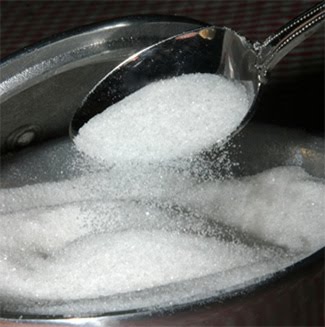
The USDA recommends limiting added sugar consumption to 10 teaspoons (40g) per day (based on a 2,000 calorie diet), about the amount in a 12oz can of Coca-Cola. Unfortunately, added sugars & their daily value are not disclosed on the Nutrition Facts Panel, making it very difficult to determine the amount of sugar that has been added to products like yogurt, canned fruit, & juice drinks. Additionally, while the FDA regulates claims like “sugar free,” “reduced” and “no added sugars,” there is no such measure governing “low sugar.” Companies can label their highly sugared foods as “Fat Free” without having to direct the consu...mer to check the sugar content. Companies have begun using their own terms, like “lightly sweetened,” which may convey to shoppers that the product is low in sugar, despite the term not being regulated by any federal rules. An example is Kellogg’s Frosted Mini-Wheats that, despite being “lightly sweetened,” contain 20% sugar by weight (12g per serving).

Friday, February 4, 2011

Misleading Label Claim #4

Some food manufacturers take advantage of consumers’ desire to eat more fruits and vegetables by using misleading statements on their products’ packaging. Many fruit snacks display images of a variety of fruits that aren’t found anywhere in the ingredients.

Betty Crocker’s Strawberry Splash Fruit Gushers claim to be made of real fruit, but contain no strawberries whatsoever, and are actually made from pear concentrate, red no. 40 dye, and are almost half sugar by weight. Other companies fool t...he consumer with their product names, like Knorr Chicken Broccoli fettuccine noodles, which actually contain more salt than dried broccoli. Synder’s of Hanover Eat Smart Veggie Crisps claim to be “A bountiful blend of potato, spinach, and tomato chips,” even though there is more potassium chloride than spinach, and virtually none of the vitamins and minerals found in spinach and tomatoes.

In the European Union, it is required that specific percentages are disclosed of ingredients or a category of ingredients that are associated with the name of the product or emphasized on the packaging with words or images. Unfortunately, the FDA has no similar requirements, leaving the American consumer a victim to deceptive advertising.

Thursday, February 3, 2011

Misleading Label Claim #3

The USDA recommends that consumers “make half your grains whole.” Many products emphasize “Made With Whole Grains” on packaging, and use dark brown colors & deceptive names to promote the health benefits of whole grains. But, most of these food items have ordinary refined wheat flour as their main ingredient, as they aren't required to disclose the % of whole grains vs refined grains.

Although still a vague indicator as to the amount, one safeguard is to check the listed ingredients. Ingredients must be listed in order of predominance, so if something like “Enriched Wheat Flour” is first, but “Whole Wheat Flour” is further down the list, you can be sure there isn’t a large amount of whole grain in the product.

Wednesday, February 2, 2011

Misleading Label Claim #2

“0g Trans Fat” is highlighted on the front of many products by using bold imagery, sometimes with banners & exclamation points. This distraction draws attention from the fact that many of these products are extremely high in saturated fat, misleading the consumer into believing they are buying a healthy product.

The FDA designates any serving with over 4g to be high in saturated fat. Products like Edy’s Dibs Bite Sized Frozen Snacks or Hot Pockets boast “0g Trans Fat” but contain excessive levels of saturated fat (16g and 7g per serving, respectively).

Misleading Label Claim #1

People are drawn to terms like "All Natural" and "Made With Whole Grains." Food labeled "natural" generated $22.3 billion in 2008, up 10% from 2007. But consumers are being deceived! "Natural" doesn't always mean BETTER! Also, 54% of all cereals are now labeled "whole grain," including plenty of processed, sugary ones.

“All Natural” was the second most common claim made on new food products in 2008. Unfortunately, both the FDA and USDA have vague rules about this phrase, and have let manufacturers that incorrectly use this claim remain in the marketplace.... Products like Hunt’s Tomato Sauce and “All Natural” Snapple Tea contain citric acid as an additive. Hunt’s Tomato Sauce’s claim as being “All Natural” is even more misleading considering the product is made of reconstituted tomato paste, and not whole tomatoes crushed soon after being picked, as many would assume. Some products containing high-fructose corn syrup (made through complex chemical industrial processes) are even able to get away with the “All Natural” label.

Certain "All Natural" deli meats have ingredients that are clearly additives one would not find if they cooked and sliced up their own natural turkey at home. The USDA also lets meat and poultry products claim to be “All Natural” when injected with beef or chicken broth, which not only increases the sodium levels to unnatural and less healthy levels, but the water inflates the weight of the product, increasing the price. "All Natural" is not a label enforced strictly enough at this point to be trusted.